AI Found the Opportunity. Now What?
Sep 23, 2026
AI is getting really good, really fast, at finding things you used to have to dig for yourself. A cash flow issue. A tax timing opportunity. A pattern in the numbers that used to take a sharp eye and a lot of time to catch.
On paper, that should mean more meaningful conversations with clients, stronger relationships, and in turn, more revenue.
But if you’re like a lot of firms, that’s not quite what you’re seeing. More opportunities are appearing on screens, but unless someone turns those insights into client conversations, much of that value stays trapped.
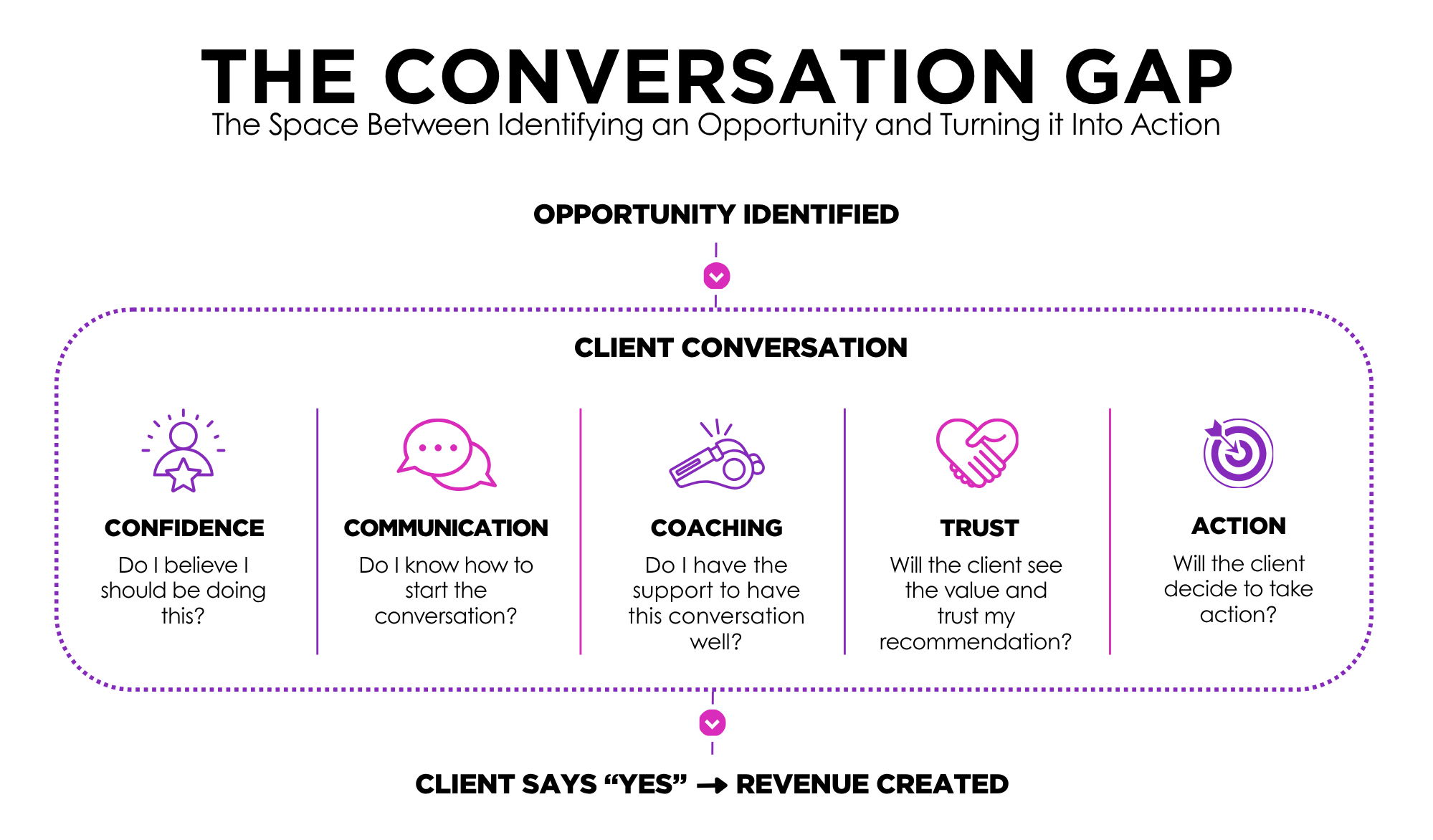
That disconnect has a name. We call it the Conversation Gap.
AI has solved the opportunity-identification problem faster than firms have solved the conversation problem. The bottleneck has moved from finding opportunities to helping people talk about them with clients.
What’s the Conversation Gap?
The Conversation Gap is the space between spotting an opportunity and helping a client understand it clearly enough to take action.
For a long time, the hard part was finding the opportunity. That’s changing fast. AI can take care of a lot of that work now. But finding the opportunity was never really the finish line. A report doesn’t create value on its own, and neither does a perfectly identified opportunity. Not until someone sits down with the client, helps them understand what it means and works through what to do next.
Every successful client conversation involves a series of skills that move an opportunity toward action.
If you’ve spent any time in accounting, you’ve probably noticed this without ever having a name for it. Every firm seems to have someone who just naturally bridges this gap.
We think about a guy named Mike here. He is technically sharp. He knows his stuff, but that’s not what sets him apart. He often visits a client, asks thoughtful questions, listens carefully and comes back with so much new work his team asks him to slow down so they can keep up.
Firms love having a Mike, but they also end up depending on him, hoping there’s another one waiting on the bench somewhere.
That’s not a strategy. It’s luck.
It Looks Like Personality But It’s Actually a Skill
The important question isn’t how to find another Mike. It’s understanding what Mike actually does differently. From the outside, it looks like personality. You think, Mike is naturally good with clients. But if you slow the conversation down, something else appears. You can see that Mike is making a series of small decisions that move the conversation toward action.
The most experienced members of your team make those decisions so automatically they don’t even realize it. In practice, that looks like:
- Recognizing why an opportunity mattered to this particular client
- Deciding when and how to bring it up
- Asking questions before offering solutions
- Diagnosing the issue underneath the surface problem
- Connecting the discussion to the client’s goals and priorities
- Helping the client work through options and decide
- Turning it into action that created real value for everyone
These patterns don’t reflect personality traits. They reflect skills built from making good decisions over and over again. Yet firms rarely break those decisions down and practice them deliberately.
Let’s remember that Mike didn’t start out this way. Those routine client conversations were actually training. He built these skills over years of working with clients. It’s the everyday calls and conversations that taught him how to listen, ask better questions, build trust and guide someone toward a decision long before the stakes got high.
That type of work, Mike’s training ground, is exactly the work AI is starting to take over. And it’s happening at the same time AI is surfacing more opportunities, faster, than any team could have found on its own. So, firms need these skills more than ever, right as the natural way people used to build them is beginning to shrink.
Those are two powerful trends moving in opposite directions. The result is that firms are creating more opportunities than their people are prepared to turn into client action.
What It’s Costing You Right Now
Most firms have spent years investing in technology, automation and technical expertise. Comparatively little has gone toward helping people get better at the conversation itself.
Add it up, and every one of those missed conversations is an opportunity that never becomes value for the client or new revenue for the firm. That’s the real cost here, not a stalled to-do list, but the new work that was sitting right there and never got claimed.
AI Found It, So Now What?
AI can find more opportunities than most firms have ever been able to see before. That part’s genuinely exciting. But unless more people on your team know how to turn those opportunities into a real conversation, a lot of that value stays trapped on a screen instead of becoming stronger client relationships and real revenue.
If the Conversation Gap is what’s limiting your growth, the good news is that you can help more of your people build that skill on purpose, conversation by conversation.
That’s exactly where we’re headed next.